Latte vs cappuccino, poured simply
Published 9 October 2026 · Vogue Cafe, Steveston Village
Same espresso, different milk. The latte vs cappuccino difference in plain language, using the Italian Espresso National Institute's own numbers.
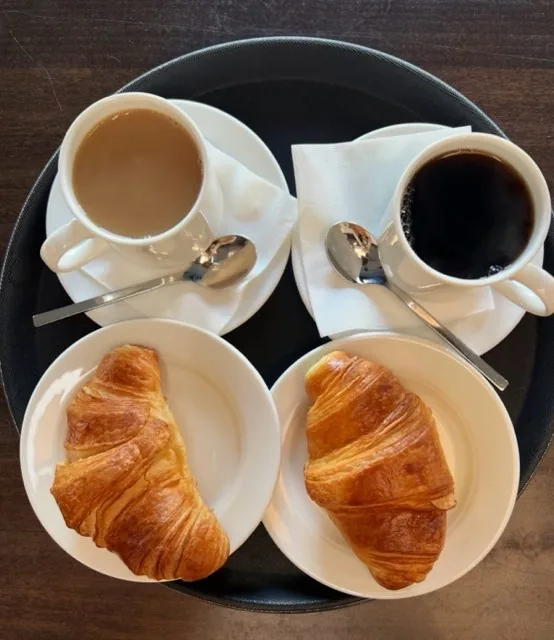
Stand at any espresso bar long enough and you'll hear it: "What's actually the difference between a latte and a cappuccino?" Both start with espresso. Both use steamed milk. The difference is in the proportions and the foam, and once you know what to look for you can taste it in the first sip. Here's the plain-language version, with the numbers taken from the people who literally wrote the standard for Italian espresso and cappuccino.
It all starts with the espresso
Every drink on an espresso menu is built on the same base. The Istituto Nazionale Espresso Italiano (the Italian Espresso National Institute, founded by Italian coffee companies and researchers) publishes the parameters for its Certified Italian Espresso:
| Parameter | Certified Italian Espresso |
|---|---|
| Ground coffee per shot | 7 g, plus or minus 0.5 g |
| Water temperature leaving the machine | 88°C, plus or minus 2°C |
| Water pressure | 9 bar, plus or minus 1 |
| Extraction time | about 25 seconds |
| Volume in the cup, including crema | 25 ml, plus or minus 2.5 ml |
| Caffeine | under 100 mg per cup |
The institute describes the ideal espresso as having a hazel-brown to dark-brown crema with a very fine texture, and a taste where sour and bitter are balanced so neither one wins. That small, intense shot is what every milk drink below is built on. Many cafés in North America pull larger or double shots, so treat these as the traditional reference point rather than a rule every bar follows.
Latte vs cappuccino: the real difference
In the latte vs cappuccino question, the espresso is the same. What changes is how much milk goes in and how airy that milk is.
The cappuccino, by the book
The Italian Espresso National Institute is unusually precise here. Its Certified Italian Cappuccino is 25 ml of espresso and 100 ml of steamed milk. The method: 100 ml of cold milk, at 3 to 5°C, is steamed until it reaches about 125 ml in volume and about 55°C, then poured onto the espresso in a cup of 150 to 160 ml capacity. The institute even specifies the milk: fresh cow's milk with at least 3.2% protein and 3.5% fat.
Look at that volume change. The milk grows by about a quarter as it's steamed, which is what creates the cappuccino's layer of fine, glossy foam. The institute describes the finished drink as white with a brown edge, with a cream of "tight mesh" and very fine bubbles or none visible. In other words: velvety, not a stiff hat of bubbles.
The latte
"Latte" simply means milk in Italian, and the drink most cafés call a latte is mostly that: espresso with a larger amount of steamed milk and a thinner layer of foam on top. There's no certification body defining it the way there is for the cappuccino, so sizes vary from café to café. The practical result is consistent, though. A latte tastes milder and creamier because the coffee is spread through more milk, while a cappuccino tastes more of coffee because there's less milk to dilute it.
Side by side
| Cappuccino | Latte | |
|---|---|---|
| Espresso | One shot base | One shot base (often more in larger sizes) |
| Milk | Less; about 100 ml before steaming in the Italian standard | More; amount varies by café and cup size |
| Foam | A noticeable, fine layer | A thin layer |
| Taste | Coffee-forward, rounder | Milder, creamier |
| Good with | A butter croissant | Something sweet, like a tart |
Where the macchiato and americano fit
Macchiato
Macchiato means "stained" or "marked" in Italian. A traditional espresso macchiato is a shot of espresso marked with a small amount of milk foam. It is the smallest milk drink on the menu and the strongest-tasting. If a cappuccino feels too milky but a straight espresso is too much, this is your drink.
Americano
An americano has no milk at all. It is espresso topped up with hot water, which gives you a longer, lighter cup with the flavour of espresso rather than filter coffee. Add milk yourself if you like.
Iced versions
Iced lattes, iced cappuccinos and iced americanos follow the same logic over ice. Because ice dilutes as it melts, iced drinks taste a little lighter the longer they sit.
How much caffeine is in each?
The caffeine comes from the espresso, not the milk, so a cappuccino and a latte made with the same shot carry roughly the same caffeine. The Italian standard puts a certified espresso at under 100 mg of caffeine per cup. For context, Health Canada recommends healthy adults keep caffeine to a maximum of 400 mg a day, and women who are pregnant, breastfeeding or planning a pregnancy to 300 mg a day. Decaf is a good option if you want the ritual without the buzz; ask for it at the bar.
Ordering at Vogue Cafe
Our espresso bar pours espresso, americano, latte, cappuccino and macchiato, plus iced americano, iced latte and iced cappuccino, and decaf is available. If you're deciding between them, here's the simple version: want to taste the coffee, order a cappuccino or macchiato; want something soft and milky to sip slowly, order a latte; want a long black coffee, order an americano.
Still torn on latte vs cappuccino? Try one of each over two visits; the difference is easiest to taste side by side.
A French café habit worth stealing is pairing the cup with a pastry. Our butter croissants and pain au chocolat come out in the morning, and the full drinks list, including tea and soft drinks, is on our menu. On a dry day, take your cup out to the patio. We're open daily from 10:30am at 12251 No 1 Rd in Steveston Village, and brunch runs until 3pm; see brunch in Steveston for what pairs best.
Frequently asked questions
Is a latte or a cappuccino stronger?
A cappuccino tastes stronger because the same espresso is mixed with less milk. The caffeine is roughly the same when both are made with the same shot, since the caffeine comes from the espresso, not the milk.
What is the official recipe for a cappuccino?
The Italian Espresso National Institute defines its Certified Italian Cappuccino as 25 ml of espresso and 100 ml of cold milk steamed to about 125 ml and about 55°C, poured into a 150 to 160 ml cup.
What does macchiato mean?
Macchiato means "stained" or "marked" in Italian. A traditional espresso macchiato is a shot of espresso marked with a small amount of milk foam.
How much caffeine is in an espresso?
The Italian standard puts a certified espresso at under 100 mg of caffeine per cup. Health Canada recommends healthy adults keep caffeine to a maximum of 400 mg a day.
Does Vogue Cafe have decaf?
Yes. Decaf is available at our espresso bar, so you can order a decaf latte, cappuccino or americano.
Vogue Cafe · Steveston Village
Open daily 10:30am–8:30pm · brunch until 3pm · licensed until midnight for special bookings
12251 No 1 Rd #130, Richmond BC · (604) 370-4444
Reserve a Table