What is a Hugo spritz, really?
Published 27 October 2026 · Vogue Cafe, Steveston Village
Prosecco, elderflower, soda and mint: the Alpine answer to the Aperol Spritz. Here's where it came from, what was in the first one, and how it compares with its orange cousins.
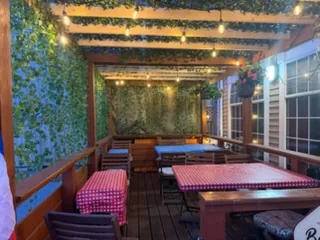
If you've sat on a patio anywhere in Europe in the last ten years, you've probably seen it: a big wine glass full of ice, pale gold bubbles and a sprig of mint poking out the top. That's a Hugo. It's younger than most people assume, it started with a different flavouring from the one most bars use now, and it wasn't designed in France at all.
What is a Hugo spritz?
A Hugo spritz is sparkling wine, usually prosecco, with elderflower liqueur or syrup, soda water, fresh mint and ice, often finished with a wedge of lime or lemon. Think of it as the floral, non-bitter branch of the spritz family.
The elderflower maker St-Germain sums up the modern drink on its own recipe page: created in northern Italy in 2005, built on elderflower liqueur, with mint and lime for aroma. The short answer to "what is a Hugo spritz" is that it's an Aperol Spritz alternative from the Alps that kept the bubbles and soda but swapped bitterness for flowers.
Where the Hugo came from
Any honest answer to what is a Hugo spritz starts with who made it. The clearest first-hand account is a 2011 report in the German bar-trade magazine Mixology, by David Metz. Tracing the drink south from Munich through Austria, the writer was put in touch with a bartender known as "AK", who said he saw himself as the Hugo's inventor. AK's real name is Roland Gruber. (The article prints it once as "Grüber"; a reader comment corrects it to Gruber, and St-Germain's page uses Gruber too.)
In that interview, Gruber says he thinks the drink was born in 2005, when he was bartender and operator of the Sanzeno wine and cocktail bar in South Tyrol. He wanted an alternative to the Aperol Spritz, which the bar was selling "by the hectolitre". The name was pure chance: he thought "Otto" didn't sound right and landed on Hugo instead.
Some online sources, Wikipedia among them, put the bar in the village of Naturns. The pages we read for this guide only say South Tyrol, so we'll leave it there.
Lemon balm first, elderflower later
Here's the detail most recipes miss. Gruber told Mixology the original Hugo was made with lemon balm syrup (Zitronenmelissesirup), and that the copycats probably moved to elderflower syrup because it was easier to get. St-Germain's version of the story is slightly different: it says "tangy lemon syrup" was replaced first by elderflower cordial and then by elderflower liqueur. The inventor's own words point to lemon balm, which is an herb, not lemon juice, so we'd go with the interview.
The timeline fits, too. St-Germain says its founder, Robert J. Cooper, launched it in 2007 as the world's first elderflower liqueur. That's two years after the Hugo was born, so the first Hugos couldn't have used it. Writing in 2011, Mixology's author said a liqueur-based Hugo hadn't appeared anywhere yet in his experience. Today the liqueur is the default in many bars and in the recipes that rank online.
The article also points to an older Austrian relative: the "Kaiser G'spritzter", a white-wine spritzer with elderflower syrup that the writer calls an old institution. So elderflower and wine were already a familiar pairing in Austria; the Hugo added prosecco and mint.
Original vs modern Hugo recipe
Here's how the two versions compare, using the inventor's recipe as printed in Mixology and the current recipe on St-Germain's site.
| Gruber's Hugo (Mixology, 2011) | St-Germain Hugo Spritz (brand recipe) | |
|---|---|---|
| Sparkling wine | 15 cl prosecco | 60 ml sparkling wine; dry prosecco recommended |
| Flavouring | 2 cl lemon balm syrup | 40 ml St-Germain elderflower liqueur |
| Soda | A splash | 60 ml sparkling water |
| Mint | Yes | 8 to 10 leaves stirred gently, plus a sprig |
| Ice | Two or three cubes, stirred in the glass | Glass filled to the top |
| Garnish | Lemon wedge | Lime wedge and mint sprig |
| Glass | Wine glass | Large wine glass |
The shift is bigger than it looks. The original is mostly prosecco with a small dose of syrup and a splash of soda. The modern brand recipe uses equal parts wine and sparkling water, so it's lighter and longer, with the liqueur carrying both sweetness and some of the alcohol. St-Germain's US page gives the same build as 1 1/2 oz liqueur, 2 oz sparkling wine and 2 oz sparkling water.
St-Germain's tips are sensible for any version: lots of ice so it melts slowly, and handle the mint gently, because bruised mint can turn bitter. The brand says to stir, not muddle, and not to squeeze the lime.
Hugo vs Aperol Spritz vs Paris Spritz
The International Bartenders Association lists one Spritz in its New Era category: 90 ml prosecco, 60 ml Aperol and a splash of soda, built in a wine glass full of ice, garnished with an orange slice. It notes other versions using Campari, Cynar or Select. There's no separate Hugo entry on the IBA list.
| Aperol Spritz | Hugo | Paris Spritz | |
|---|---|---|---|
| Flavour driver | Aperol, the bitter liqueur in the classic spritz | Elderflower (liqueur or syrup) and mint | Grand Marnier, which its maker describes as cognac blended with bitter orange liqueur |
| Bitterness | Yes, that's the point | None to speak of | Bitter orange, softened by cognac |
| Soda | A splash (IBA) | Often as much soda as wine (St-Germain) | Varies by bar |
| Garnish | Orange slice (IBA) | Mint, lime or lemon | Varies by bar |
The Paris Spritz doesn't have an official reference recipe that we could find, so treat it as a family resemblance rather than a fixed formula.
Elderflower and prosecco, briefly
St-Germain is made from the flowers of the European elder, Sambucus nigra. The brand says the blossoms usually open in late May and are hand-picked during a three-to-four-week window, typically early in the morning, with up to 1,000 flowers going into each bottle. Its golden colour comes from pollen, it's 20% alcohol, and the maker recommends finishing an opened bottle within six months because the colour slowly oxidises. The name nods to the Saint-Germain-des-Prés district of Paris.
Why "Extra Dry" prosecco isn't the driest
Prosecco DOC is made mainly from the Glera grape, and the bubbles come from a second fermentation in large tanks (the Martinotti method), according to the Prosecco DOC consortium. Its sweetness labels can trip you up: Extra Dry prosecco has 12 to 17 grams of sugar per litre, and Dry has 17 to 32. Brut is under 12 grams, and Brut Nature, at 0 to 3 grams, is the driest. With a sweet liqueur already in the glass, a drier prosecco keeps a Hugo from turning cloying.
The Hugo at Vogue
At Vogue Cafe in Steveston Village, the Hugo Spritz is on the cocktail list as "St-Germain, sparkling white wine, soda, ice", alongside the Aperol Spritz ("Aperol, sparkling white wine, soda, ice") and the Paris Spritz ("Grand Marnier, sparkling white wine, soda, ice"). If you like elderflower with a bit more backbone, the "Gin & Soda — French Style" is listed as Bombay Sapphire, soda, St-Germain and ice. The full lineup is on our French cocktails page, and the French apéritif guide explains where a spritz fits before a meal.
A spritz suits a sunny afternoon, and the patio includes a covered side section for the days that aren't. If you're more of a Burgundy person, read our Kir royale guide next, or browse the menu.
Hugo spritz questions
What is a Hugo spritz made of?
A Hugo spritz is sparkling wine, usually prosecco, with elderflower liqueur or syrup, soda water, fresh mint and ice, often finished with a wedge of lime or lemon.
Where was the Hugo spritz invented?
In South Tyrol, the German-speaking province in Italy's far north. Bartender Roland Gruber, known as AK, told Mixology magazine he created it around 2005 at the Sanzeno wine and cocktail bar as an alternative to the Aperol Spritz.
Was the original Hugo made with St-Germain?
No. In his 2011 interview, the inventor said he first made it with lemon balm syrup, and that copycats switched to elderflower syrup because it was easier to find. St-Germain itself was only launched in 2007.
Is a Hugo spritz bitter like an Aperol Spritz?
No. The Aperol Spritz gets its bite from Aperol, while the Hugo has no bitter liqueur at all. Its flavour comes from elderflower and mint, so it tastes floral and lightly sweet instead.
Is a Hugo spritz on the IBA official cocktail list?
Not as of this writing. The IBA lists a single Spritz, made with prosecco, Aperol and soda, and notes versions with Campari, Cynar or Select, but has no separate Hugo entry.
Vogue Cafe · Steveston Village
Open daily 10:30am–8:30pm · brunch until 3pm · licensed until midnight for special bookings
12251 No 1 Rd #130, Richmond BC · (604) 370-4444
Reserve a Table