The espresso macchiato, explained
Published 3 November 2026 · Vogue Cafe, Steveston Village
One shot of espresso, one small mark of milk. Here's what an espresso macchiato really is, why it shares a name with a tall milky drink, and how to get the one you want.
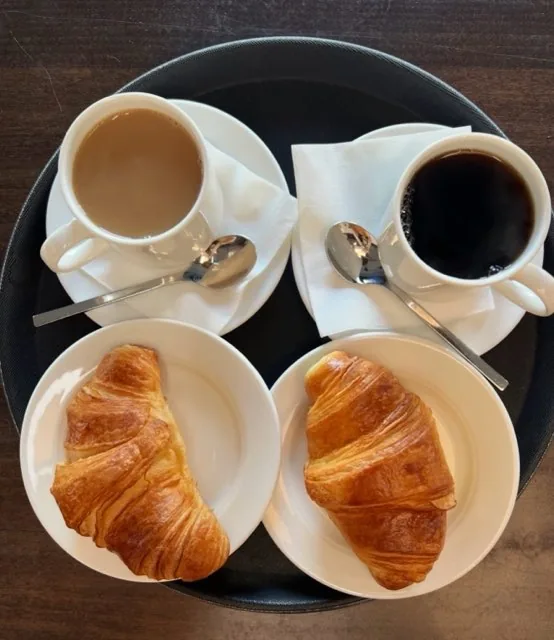
The espresso macchiato is the drink people order by accident more than any other. Someone asks for a macchiato expecting a tall, sweet glass of milky coffee, and a small cup arrives holding a single shot with a white dot of foam on top. Both drinks share the name, but they sit at opposite ends of the coffee menu.
Here's what the real thing is, where the word comes from, how it differs from its look-alikes, and how to order the one you actually want.
What is an espresso macchiato?
An espresso macchiato is a single espresso with a small amount of milk, usually foamed, spooned or poured onto it. The milk doesn't change the drink into a milk coffee. It takes the sharpest edge off the shot and adds a little sweetness and texture, while the espresso stays firmly in charge.
Because the base is just one shot, the whole drink is tiny. The Istituto Nazionale Espresso Italiano, the body that certifies Italian espresso, defines its Certified Italian Espresso as about 25 ml in the cup, crema included, and recommends serving it in a plain white china cup of 50 to 100 ml. A macchiato in that cup leaves plenty of room for its bit of milk and nothing more.
The espresso underneath
The institute's brochure lists the target figures behind that shot: 7 g of ground coffee, water at 88°C under 9 bar of pressure, about 25 seconds of extraction, and a drink that reaches the cup at about 67°C. With so little liquid in the cup, a macchiato is a drink of a few sips, meant to be finished while it's still warm.
The institute's own pages describe the certified espresso and cappuccino in detail but don't set a standard for the macchiato, so there is no official recipe. Bars agree on the idea and vary on the amount of milk.
Where the word comes from
Macchiato is the past participle of the Italian verb macchiare, which the Treccani dictionary traces to the Latin maculare, from macula, a spot or stain. Its first sense is the everyday one: to stain a tablecloth or a shirt.
Treccani's second sense is the one that matters here. To macchiare a drink is to add a small quantity of another liquid to adjust its flavour or colour, and the dictionary gives two examples side by side: you macchiare il caffè by adding a little milk, and you macchiare il latte by adding a little coffee. Those two phrases are the whole story of the two drinks that share this name.
- Caffè macchiato (espresso macchiato): coffee, spotted with milk.
- Latte macchiato: milk, spotted with coffee.
Espresso macchiato vs cortado, latte macchiato and the caramel kind
Four drinks get mixed up here. The table sorts them by what's actually in the cup.
| Drink | What it is | Size | Taste |
|---|---|---|---|
| Espresso macchiato | One espresso with a small mark of milk or foam | Espresso cup | Intense, coffee first |
| Cortado | Espresso with roughly as much warm milk, little foam | Small glass or cup | Softer, still coffee-led |
| Latte macchiato | A glass of steamed milk with espresso poured in | Tall glass | Mild and milky, layered |
| Caramel-style macchiato | Sweetened milk drink built like a latte macchiato, finished with caramel | Large cup | Sweet dessert drink |
The cortado
Cortado is Spanish for "cut": the milk cuts the coffee. Coffee guides usually describe it as espresso with about an equal amount of steamed milk and little or no foam, though measures vary from bar to bar. A cortado carries noticeably more milk, enough to soften the coffee, and usually little or no foam. An espresso macchiato is only a mark of milk on the shot, so the espresso still leads.
The latte macchiato
Here the order is reversed. Steamed milk goes into the glass first and the espresso is poured over it, leaving a visible mark and, often, layers you can see through the glass. Your first sip catches more coffee and the drink gets creamier as you go. No. A latte macchiato is milk marked with coffee, so it is a tall, mild drink. An espresso macchiato is coffee marked with milk, so it is small and intense.
The caramel-style macchiato
The big, sweet drink that many people picture when they hear the word comes from chain coffee menus, not Italian bars. It borrows the latte macchiato's build, milk first and espresso on top, then adds syrup and a caramel finish. It's a perfectly good drink, just a different one. If that's what you're craving, ask for it by its full name; a plain "macchiato" at an espresso bar will usually get you the small one.
How an espresso macchiato tastes
Expect the espresso almost unchanged on the first sip, with a softer, rounder finish. The institute describes a good espresso's taste as round and velvety, with sour and bitter in balance and an aroma that lingers for seconds or even minutes after you swallow. A spot of foam leaves all that in place and simply calms any harshness.
That makes the macchiato a good test of the coffee itself. A latte can hide a so-so shot under milk. A macchiato can't. It's also a natural partner for something sweet: a coffee éclair or a lemon tart sets off the bitterness well.
Caffeine and decaf
The milk adds almost nothing to the caffeine. About as much as the espresso inside it. The Italian Espresso National Institute puts a certified single espresso under 100 mg of caffeine, and Health Canada advises healthy adults to keep to a maximum of 400 mg a day. Health Canada's advice drops to 300 mg a day for women who are planning a pregnancy, pregnant or breastfeeding, and is set by body weight (2.5 mg per kg) for children and teens.
For comparison, Health Canada's own table lists an 8 oz (237 ml) cup of brewed coffee at about 135 mg. If you want the ritual later in the day without the caffeine, ask for it decaf; our guide to how decaf coffee is made explains what that means for the bean.
How to order one
- Say "espresso macchiato" in full if you want the small one. At most espresso bars, "macchiato" alone means the same thing, but the full name removes any doubt.
- Want more coffee? Ask for a double shot.
- Want it milder? Ask for a cortado-style drink or a cappuccino instead of extra milk in a macchiato.
- Drink it soon. It's built to be finished while warm.
It is the past participle of the Italian verb macchiare, from the Latin for a spot or stain. Treccani's dictionary gives a coffee use of the verb: you macchiare a coffee by adding a little milk to it. It tastes far stronger, because the same espresso meets only a spoonful or two of milk. The caffeine depends on how many shots are in the cup, not on the milk.
Ordering a macchiato at Vogue Cafe
Macchiato is on our espresso bar menu in Steveston Village alongside espresso, americano, latte and cappuccino, and decaf is available. If you're still choosing between the milk drinks, latte vs cappuccino covers the two longer cups, and French café etiquette explains why a small black coffee after a meal is the French habit. A macchiato with a coffee éclair from our éclairs is a small, strong afternoon treat; the full drinks list is on the menu.
Vogue Cafe · Steveston Village
Open daily 10:30am–8:30pm · brunch until 3pm · licensed until midnight for special bookings
12251 No 1 Rd #130, Richmond BC · (604) 370-4444
Reserve a Table