French café etiquette, made simple
Published 30 October 2026 · Vogue Cafe, Steveston Village
Bonjour first, un café means espresso, and the tip is already in the price. Here's how a French café really works, with the rules checked against official French sources.
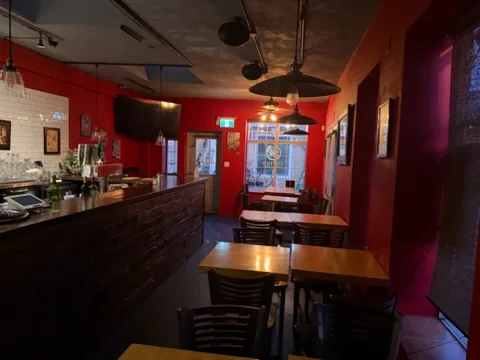
A French café looks simple from the street: small round tables, chairs turned to face the pavement, a waiter moving fast with a tray. Inside, it runs on a handful of unwritten rules that every French person learned as a child and most visitors pick up by trial and error. None of them are hard. Knowing them just means you get served sooner, pay the right price, and feel at home while you sit.
This guide walks through French café etiquette from the moment you step in to the moment you leave, with the legal bits (service, water, posted prices) checked against official French government sources rather than repeated from other travel blogs.
French café etiquette starts with bonjour
The single most useful word is bonjour. Say it as you walk in, to the person behind the bar or the first server who looks your way. After dark it becomes bonsoir. On the way out, merci, au revoir or bonne journée (have a good day) closes things off. Lonely Planet's France authors put it plainly: greet everyone, and say goodbye as you leave.
Skipping the greeting and going straight to "one coffee, please" is the classic visitor mistake. It isn't rude in your head, but in France it reads as treating the server like a vending machine. A friendly bonjour first, even in an accent, changes the whole exchange.
A few other small courtesies help:
- Keep your voice down. French café conversation is lively but rarely loud, and travel guides consistently flag volume as the thing that marks out tourists.
- Use s'il vous plaît (please) and merci (thank you) generously.
Counter, room or terrace: where you stand changes the price
A French café usually has three places to drink: the bar counter (le comptoir, nicknamed le zinc, which Larousse records as familiar slang for a bar counter), the indoor room (la salle) and the pavement terrace (la terrasse).
This matters because the same coffee can cost different amounts depending on where you drink it. France's official business portal, Service Public Entreprendre, says a café must post, visibly from outside, its counter and table prices for the drinks it serves most often. The list is set out in a 1987 government order and starts with la tasse de café noir, the cup of black coffee, followed by draught beer, juice, soda, mineral water, an aniseed aperitif, the dish of the day and a sandwich.
Rick Steves' France guide adds the practical warning: the seated price is the higher one, so don't pay the counter price and then carry your cup to a table. If you want a quick espresso standing up, order at the bar. If you want to sit, sit first and let the server come to you.
Seating yourself
At most cafés you simply choose a free table. Lonely Planet's Paris writer describes it exactly that way: grab a terrace table and a server will come over. If you'd rather drink standing up, the counter is yours without asking anyone.
What to order: the French coffee words
French coffee vocabulary is short, and it doesn't match the menu boards most Canadians are used to. Here is what the words mean, using Larousse, the standard French dictionary, where it gives a definition.
| You say | You get |
|---|---|
| Un café | A small black espresso. Larousse lists express and petit noir as synonyms. |
| Un express / un expresso | The same thing, by its formal name. |
| Un noisette | Larousse: coffee with a little milk added. Named for its hazelnut colour. |
| Un crème | Short for café crème, the milky coffee most visitors are after. |
| Un café au lait | Larousse: black coffee with milk added. Mostly a breakfast drink. |
| Un déca | Short for café décaféiné, decaf. |
You get a small black espresso. Larousse gives express and petit noir as everyday synonyms for café in this sense. If you order "a coffee" expecting a big mug, that tiny cup is the surprise. There are no free refills either; each cup is its own order.
When the milky coffees come out
Milky coffee belongs mostly to the morning. Rick Steves describes the typical French breakfast as café au lait, hot chocolate or tea with a roll and a croissant. Later in the day, and especially after a meal, the default is a small black café; Larousse even uses le café to mean the moment after a meal when coffee is served. Nobody will refuse you a cappuccino or a crème at 3pm, but if you want to order like a local after lunch, ask for un café.
Water, service and the bill
Ask for une carafe d'eau
Yes. French bars and restaurants must let customers know they can ask for free drinking water, served cool or at room temperature. Ask for une carafe d'eau. Service Public Entreprendre lists this among the rules for bars and restaurants and points to France's Environment Code as the legal basis. Bottled water is a separate, paid order, so be specific: une carafe d'eau, s'il vous plaît gets you a jug of tap water.
Service compris: what it means for tipping
A French order from 27 March 1987 on price display in places serving food and drink says that where a service charge is collected, the displayed price is understood to be "taxes et service compris": taxes and service included. Service Public Entreprendre tells owners that if the price includes service, the menu must say prix service compris.
So the price on the board is the price you pay. France's official tourism site, France.fr, says almost all restaurants build a 15% service charge into their prices, that leaving another 2 to 3% is customary when a meal or service has been especially good, and that leaving the waiter your small change is common when paying cash. In short, French café etiquette treats a tip as a thank-you, not a duty.
L'addition, s'il vous plaît
L'addition is the bill; Larousse defines it as the note listing what a customer spent at a restaurant or café, and its own example is demander l'addition, to ask for the bill. Catch your server's eye and say l'addition, s'il vous plaît. Sometimes the bill lands with your order, but nobody expects you to pay and leave straight away. Lonely Planet notes the bill is often left on the table with your order, and payment isn't expected right away unless you're told otherwise.
Lingering is the point
The hardest habit for North Americans to adjust to is that nobody is trying to turn your table. One coffee can buy you an hour on a terrace with a book or a view of the street, and that is exactly what French cafés are for. France.fr calls café culture as much a part of the French art de vivre as the food itself.
That relaxed pace cuts both ways. Service can feel slow, and the server may not check on you every few minutes. It's nothing personal. When you want something, a raised hand and a polite s'il vous plaît is all it takes.
One thing visitors notice on terraces: smoking is banned indoors in France, but outdoor café tables are another matter, as Lonely Planet points out. If smoke bothers you, a table inside or at the back of the terrace is the easier choice.
A quick French café etiquette checklist
- Say bonjour (or bonsoir) as you come in.
- Decide: standing at the counter, or sitting? Check the posted prices.
- Sitting? Choose a free table and let the server come to you.
- Order un café for an espresso, un crème for a milky coffee.
- Ask for une carafe d'eau if you want free tap water.
- Take your time. Ask for l'addition when you're ready.
- Service is included; small change is a nice extra, not a rule.
- Merci, au revoir on the way out.
Often, yes. Cafés must post the counter price and the table price of their most common drinks, and the counter price is usually the lower one.
Bringing the habit home to Richmond
Most of this travels well. The greeting, the unhurried pace and the small espresso after a meal work anywhere. The money rules don't: service compris and the free-water rule are French regulations, and restaurants in British Columbia follow local customs and rules instead. If you're unsure how anything works at a place you're visiting, asking is always fine.
At Vogue Cafe in Steveston Village we're a casual French bistro and café, open daily from 10:30am, and our espresso bar menu reads like a short French list: espresso, americano, latte, cappuccino and macchiato, with decaf available. If the names are new to you, our guides to latte vs cappuccino and the espresso macchiato explain the differences, and French menu terms covers the food side of the card.
For the full terrace effect, there's the patio, and a coffee with a butter croissant is about as French a morning as Richmond gets. Everything we pour and serve is on the menu.
Frequently asked questions
Do you tip in a French café?
Prices in a French café already include service: French rules say a displayed price is understood to be taxes and service compris. Leaving your small change, or a little more when the service was lovely, is a kind gesture rather than an obligation.
Can I just sit down at any table?
At most cafés, yes. Pick a free table and a server will come over to take your order.
Vogue Cafe · Steveston Village
Open daily 10:30am–8:30pm · brunch until 3pm · licensed until midnight for special bookings
12251 No 1 Rd #130, Richmond BC · (604) 370-4444
Reserve a Table